

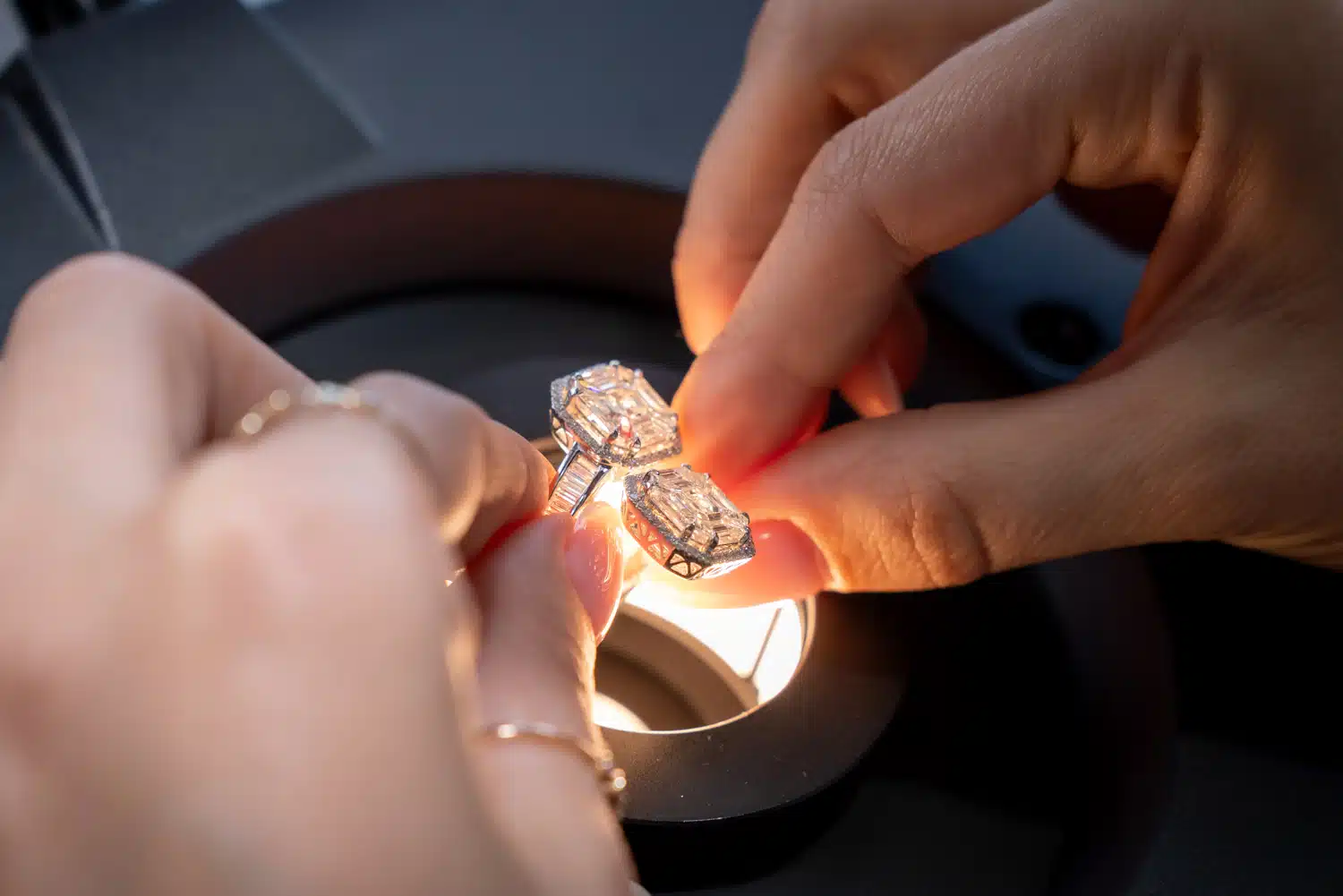
Now more than ever, diamonds made in labs are changing how people see gemstones. Because folks pay closer attention to Earth’s health, worker fairness, and new tech, these stones pop up everywhere once mined gems ruled. Beauty without guilt? That idea pulls buyers in fast. Spotting the difference matters when picking something shiny that won’t cost the planet. Lab creations stand tall where nature took ages – same sparkle, fresh path.
Lab Grown Diamonds Explained?
Created in labs instead of pulled from rock deep underground, these stones match real diamonds in every way that matters. Identical under close inspection, their sparkle, density, and makeup fool even precise tools. Not fakes such as moissanite or glass substitutes, they form atom by atom like those dug from mines. Their inner pattern copies nature exactly – same toughness, same shine when light hits just right.
One way to make synthetic diamonds is called High Pressure High Temperature. This method copies how real diamonds form deep underground. It uses intense heat along with heavy pressure on pure carbon. Another technique goes by the name Chemical Vapor Deposition. That one builds diamond layers slowly from a gas filled with carbon. The environment stays carefully managed during growth. These stones get judged just like mined ones do. Experts check them using carat weight, how well they’re cut, their hue, and transparency. Each trait helps decide quality.
Lab Grown Diamonds Offer Cost and Ethical Benefits
- Ethical Sourcing:
- Lab-created stones sidestep the moral problems tied to digging up gems from the earth. Mining natural diamonds often links to worker mistreatment, sometimes even funding wars. These synthetic versions offer peace of mind – no harm done during creation. Shoppers walk away knowing their choice didn’t cost someone else their dignity.
- Environmental Sustainability:
- Digging up diamonds often damages forests, washes away soil, leaves scars on the land, pollutes rivers. Growing gems in labs messes with nature far less uses smaller plots of ground needs fewer materials overall. Studies find man-made stones usually release less planet-warming gas than those pulled from deep underground.
- Cost-Effective:
- For similar quality, lab-created diamonds usually cost 20–40% less than natural ones. Because of this difference, shoppers can choose bigger or better gems without spending extra.
- Transparency and Certification:
- Fresh from the lab, these stones carry papers stamped by trusted names – think GIA or IGI. Proof sits inside every report: clear details on shade, purity, truth. Much like their earth-mined cousins, nothing hides in shadows.
Common Applications of Synthetic Diamonds
Starting with their role in engagement rings, buy lab grown diamonds appear just as often in earrings and necklaces. Durable enough for daily use, these stones hold up well while keeping their shine. Because prices stay lower than mined options, many pairs pick them when planning proposals. A smaller price tag means room to go bigger on carat size or spend more on unique settings instead.
Lab Grown Diamonds How to Pick the Right One
Picking out a lab-created diamond means looking at just what you’d check with a natural one
- A single carat sets how big or heavy a diamond feels. Though grown in labs, these stones come in many sizes. Size shifts based on demand, yet choice stays broad.
- Light bounces differently depending on how the gem is shaped. Top quality shaping sends most rays back to your eye. Poor form lets brightness slip away.
- A stone’s hue ranges across a scale, where D stands out as completely free of tint. Starting near the top, each step down adds a hint more shade. Most want that icy clarity found only at the highest end. Some shades catch the eye differently under light. What matters most is how little color shows when you look closely.
- Not many stones stay free of tiny marks inside or on the surface. A diamond without these flaws stands out simply because it is hard to find. Its value rises just by being uncommon.
- Start with a certified diamond – this way, you know what you’re getting. A trustworthy report backs up every detail about its clarity, color, cut, because without proof, claims mean little.
Trends in Lab Grown Diamonds
More people around the world want diamonds made in labs now. Younger shoppers care about eco-friendly choices, fair practices, so they lean toward these stones. Because of that, lab versions feel like a smart pick. Designers who craft jewelry are jumping in too, creating one-of-a-kind mounts that show off how bright synthetic gems can shine.
Out of nowhere, labs started making colorful man made diamonds. Blue ones, once hard to find underground, now grow under controlled conditions. Pink shades appear without digging through rock layers. Yellow tones emerge from precise scientific tweaks instead of chance formations. Choice expands when nature gets a high-tech assist.
Where to Buy Lab Grown Diamonds
These days you can find lab-created diamonds at well-known internet shops or local jewelry outlets. When a seller is reliable, you get proof of origin, proper documentation, and help if needed. A few top web-based sellers provide fair costs along with personal touches, opening doors to finding exactly what suits you best.
Conclusion
Choosing lab-created diamonds isn’t only about looking good – it reflects thoughtfulness blending elegance, worth, and care for people and planet. Thanks to progress in science and sharper buyer insight, these stones now sit alongside traditional gems as a common pick. Identical in shine, strength, tough appeal yet easier on wallets, they arrive free of harm tied to digging deep into Earth.
Anyone thinking about buying a diamond – be it for an engagement ring, present, or simply to own – might find lab-created stones offer beauty without the burden. Picking a synthetic gem means valuing both elegance and responsibility. These gems shine bright while leaving less behind. A decision like this reflects care – not only for sparkle, but for what happens beyond the surface. What you wear can echo how you see the world.