

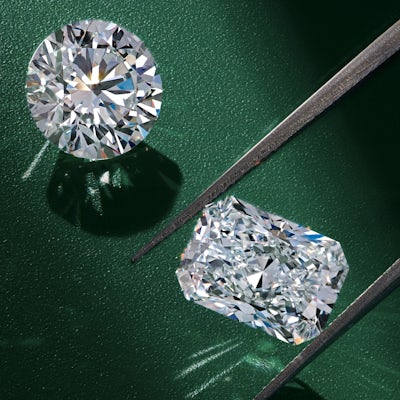
To some, a diamond is a diamond. But to others, where it comes from, how it’s made, and even the ethics behind it, matters big time. Think about it: when was the last time a piece of jewelry actually told a story beyond “I look good”? Today, consumers want meaning. They want sparkle, yes, but also a story they can feel proud of. Lab created diamonds offer that mix: the shine of a traditional diamond but with a lighter environmental footprint. And let’s be real, who doesn’t love shiny stuff that’s guilt-free?
Diamonds Through Time
Diamonds have been stealing hearts for centuries. Ancient civilizations believed they were fragments of stars or tears of gods. Fast forward to today, and diamonds still carry that same mystique—but with a modern twist. Traditionally, diamonds were mined. That meant labor, environmental costs, and, honestly, a lot of complicated ethics. Some diamonds came with a dark side.
Lab grown diamonds, on the other hand, are a modern miracle. Scientists can replicate the exact conditions of Earth’s crust—heat, pressure, the whole shebang—to grow a diamond in weeks instead of millions of years. It’s like baking a cake, but way cooler, and infinitely sparkly. And yes, they’re chemically and physically identical to mined diamonds. You can’t tell the difference with the naked eye.
Imagine walking into a jewelry store and asking for a diamond. A traditional jeweler might raise an eyebrow when you mention lab created diamonds. But the truth is, they’re just as gorgeous, sometimes cheaper, and come without the moral baggage. Honestly, it feels like the jewelry world finally caught up with the 21st century.
What’s Hot Right Now
So, what should you consider if you’re debating lab grown diamonds vs real diamonds? Let’s break it down like we’re chatting over coffee.
- Price – Lab created diamonds usually cost 20–40% less than their mined counterparts. That’s a lot of extra cash for that honeymoon, new gadget, or…more rings.
- Ethics – To be fair, this is huge. Lab diamonds avoid the messy human and environmental issues sometimes tied to mining. No conflict zones, no giant holes in the Earth, just science doing its thing.
- Quality – Here’s the fun part: lab diamonds can be made almost flawless. That means fewer inclusions, brighter sparkle, and more control over shape and color. Sure, mined diamonds can be flawless too, but it’s rarer.
- Trend Factor – Believe it or not, lab diamonds are officially trendy. Celebs, influencers, even eco-conscious couples are leaning into them. And let’s face it, if it’s good enough for the red carpet…
- Resale Value – Okay, a tiny downside. Lab created diamonds don’t hold value like mined diamonds. But let’s be honest, most people buy diamonds to wear them, not to cash them in.
At the end of the day, choosing between lab grown diamonds and real diamonds is kind of like picking between a vintage leather jacket and a sleek new designer coat. Both look amazing. Both have pros. But one might fit your lifestyle better.
It Matters Where You Buy
Here’s something interesting: depending on where you are, your choices change. In cities like Hong Kong, New York, or Dubai, lab created diamonds are more widely available than you might think. Jewelers are stocking them next to mined diamonds, and consumers are getting picky.
Why does that matter? Because it’s not just about the stone—it’s about context. Local trends, ethics, even climate awareness can influence your choice. For instance, in Hong Kong, lab grown diamonds are gaining traction because younger buyers are eco-conscious, tech-savvy, and love the novelty of modern science. Meanwhile, traditionalists still swear by mined diamonds for their “timeless appeal.”
It’s like choosing a restaurant. You might love the classic steakhouse, but the new vegan spot? Surprisingly satisfying. Same principle. You just have to know your priorities and, honestly, what makes your heart skip a beat.
Lab Created Diamonds Actually Work
Let’s demystify the magic a little. Lab grown diamonds are not aliens from outer space—they’re just science being awesome. Here’s the casual lowdown:
- High Pressure, High Temperature (HPHT) – This method mimics how diamonds naturally form in the Earth. Carbon is subjected to extreme heat and pressure. Boom, diamond crystals grow. Simple, right?
- Chemical Vapor Deposition (CVD) – Fancy name, same result. Scientists use gases and a little microwave wizardry to deposit carbon onto a substrate. Over time, layers build up and a diamond forms. Cool, huh?
- Polishing and Grading – Once the diamond is grown, it gets cut, polished, and graded just like mined diamonds. So when you buy one, it’s literally indistinguishable from the real thing. Unless you know exactly what to look for, your eyes won’t catch a difference.
The bottom line: lab created diamonds are science, art, and magic all rolled into one. They’re ethical, stunning, and just a tad rebellious.
Wrapping It Up
At the end of the day, diamonds—whether mined or lab created—are more than rocks. They’re about moments, choices, and stories. Lab grown diamonds vs real diamonds isn’t just a debate about geology. It’s about ethics, style, and personal taste. So next time you’re window shopping, sipping coffee, or scrolling jewelry sites at 2 a.m., ask yourself: what matters more? A story millions of years in the making, or a modern marvel that’s guilt-free, sparkly, and totally you?